

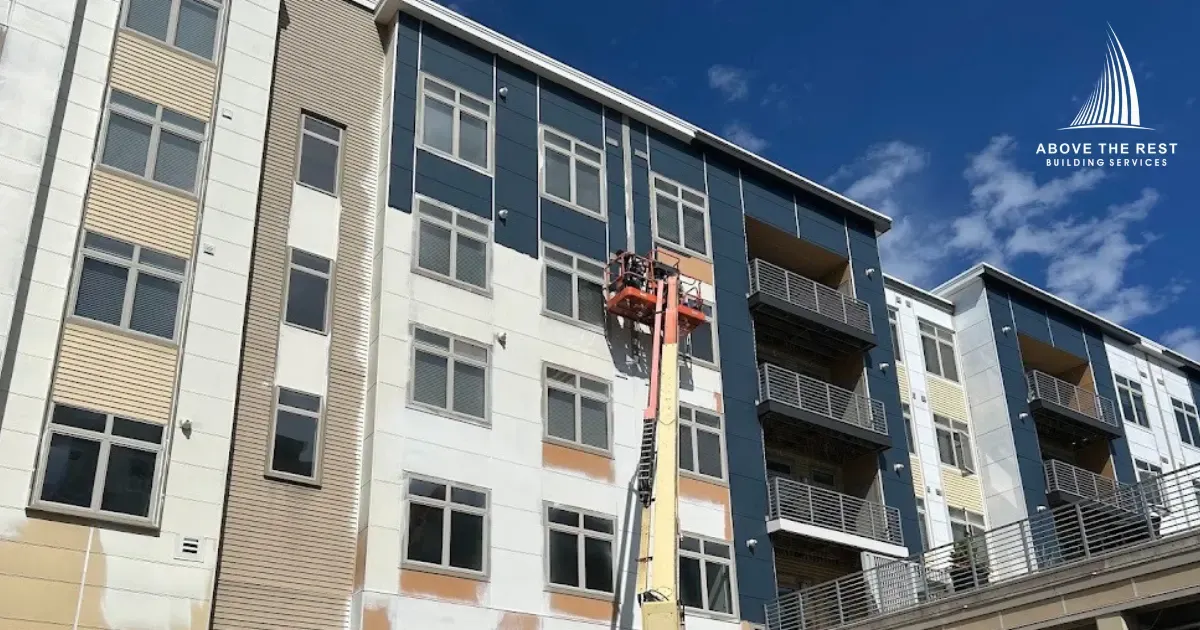
When Should You Repaint Your Commercial Building Exterior?
A commercial building rarely needs repainting simply because the color looks dated.
More often, the exterior starts showing changes.
Paint begins peeling around windows. One elevation fades faster than another. Previously repaired areas become visible again.
Coatings begin chalking or cracking. Certain sections repeatedly show deterioration after periods of rain or
seasonal weather changes.
For property and facility managers, these conditions raise a more important question than appearance:
Is the coating reaching the end of its service life, or is something underneath contributing to the failure?
That distinction matters. Repainting without understanding the existing condition can improve appearance temporarily
while leaving the underlying issue unresolved.
When Does a Commercial Building Need Repainting?
There is no universal repainting interval for commercial buildings.
Coating performance depends on several factors, including the substrate, existing coating system, previous surface preparation,
exposure, moisture conditions, building orientation, maintenance history, and the environment around the property.
Rather than relying on age alone, property managers should watch for changes such as:
- Peeling, flaking, or blistering coatings
- Chalking or powdering surfaces
- Significant or uneven fading
- Cracking through painted areas
- Exposed substrate
- Corrosion on painted metal components
- Recurring staining
- Coating failure around windows, joints, or transitions
- Previously repaired areas deteriorating again
These conditions do not all have the same cause.
They do, however, indicate that the affected area should be evaluated before another coating is applied.
Why Does Paint Keep Failing in the Same Area?
Recurring coating failure deserves closer attention.
If paint repeatedly peels around the same windows, fails along particular joints, or deteriorates on one section of the façade
faster than surrounding areas, simply repainting may not provide a lasting result.
Possible contributing conditions can include moisture intrusion, failed or deteriorated sealants, substrate deterioration, corrosion,
incompatible existing coatings, or inadequate previous surface preparation.
The visible paint failure is therefore not always the problem itself.
It may be evidence of another exterior condition that needs to be understood first.
A professional approach begins with evaluating the existing surface and identifying what preparation or repair may be
necessary before specifying and applying a new coating.
What Property Managers Are Really Trying to Avoid
For property managers, commercial painting is not just an appearance decision. It affects budgets, scheduling, occupants,
and future maintenance.
The concern is approving a substantial painting project and then seeing premature failure because an underlying
condition was overlooked.
There are operational considerations as well.
How will upper elevations be accessed? Will entrances or pedestrian areas be affected? How will work be coordinated
around tenants? Are masonry, sealant, waterproofing, or other repairs needed before painting begins? Can related work be
coordinated while access is already established?
These questions should be addressed during planning rather than after the project is underway.
How Do New England Conditions Affect Exterior Coatings?
Commercial buildings in Boston, Cambridge, and throughout New England experience significant seasonal variation.
Heat, humidity, UV exposure, rain, freezing temperatures, snow, ice, and repeated freeze-thaw conditions can all influence
exterior materials and coating performance.
Moisture is particularly important.
Water entering through cracks, deteriorated joints, failed sealants, or other vulnerable areas can affect both the substrate
and the performance of coatings applied over it.
Seasonal timing also requires professional judgment.
Late summer can provide workable conditions for exterior painting in New England, but the calendar alone should never
determine whether a coating should be applied.Surface and ambient temperatures, moisture, humidity, dew point, forecast
conditions, substrate condition, and the coating manufacturer’s application requirements all need to be considered
when scheduling exterior work.
The Performance of a Coating Starts With Surface Preparation
A coating can only perform as well as the surface and conditions allow.
Depending on the existing building condition and specified coating system, preparation may include cleaning, removing
loose or failing material, addressing cracks, treating corrosion, repairing deteriorated substrates, or replacing failed sealants.
Different materials also require different approaches.
Masonry, concrete, metal, wood, and previously coated surfaces have different characteristics. Existing coatings also need
to be considered for condition and compatibility before another system is applied.This is why surface preparation should be
clearly defined in the scope of work.
For property managers reviewing proposals, one of the most useful questions is:
“What preparation and repairs are required before the coating is applied?”
What If the Exterior Is Difficult to Access?
On multi-story commercial properties, access can significantly influence project planning.Areas requiring painting may be
located around upper-floor windows, recessed elevations, architectural features, or other sections that cannot be efficiently
reached from ground level.
Depending on site conditions and the scope of work, appropriate access may involve boom lifts, aerial platforms, rope access,
or other methods.
The correct approach depends on more than building height.
Equipment positioning, ground conditions, pedestrian traffic, entrances, adjacent properties, tenant activity, and the
specific location of the work all need to be considered.
For an occupied commercial property, access planning and site coordination are part of the project—not separate
considerations.
When Painting Reveals a Broader Exterior Maintenance Need
A painting project can sometimes identify conditions beyond the coating itself.
Failed sealants may be present around windows. Masonry may require repair. Staining may warrant further investigation.
Exterior surfaces may require cleaning or preparation before coating.
Where painting, sealant, masonry, cleaning, waterproofing, or access requirements overlap, coordinating the scope under a
broader commercial exterior maintenance plan can simplify scheduling and reduce duplicated access requirements.
Above The Rest Building Services provides commercial painting along with façade maintenance, waterproofing, masonry repairs,
pressure washing, window cleaning, and high-access exterior services across Boston and New England.
This allows the scope to be considered around the condition of the building rather than treating every exterior requirement
as an unrelated project.
What Should Property Managers Ask Before Approving Exterior Painting?
Before moving forward with a commercial exterior painting project, consider asking:
- What is causing the existing coating deterioration?
- What surface preparation is included?
- Are repairs required before coating?
- Is the proposed coating compatible with the substrate and existing conditions?
- What application conditions must be maintained?
- How will difficult elevations be accessed?
- How will pedestrian and tenant activity be managed?
- Are there related exterior maintenance items that should be addressed while access is established?
A detailed scope should make these considerations clear before work begins.
Frequently Asked Questions
How often should a commercial building exterior be repainted?
There is no universal interval. Substrate, coating system, preparation, exposure, climate, and maintenance history all affect
service life. The existing condition should be evaluated rather than relying solely on the age of the previous paint job.
Can you paint over peeling exterior paint?
Loose or failing coatings generally require appropriate preparation before repainting. The cause of recurring failure should
also be evaluated before a new coating system is applied.
What is the best time for exterior painting in New England?
There is no single calendar date. Appropriate conditions depend on surface and ambient temperature, moisture, humidity, weather,
and the application requirements of the specified coating.
Can commercial exterior painting be completed while a building remains occupied?
Often, yes. Access, work zones, scheduling, pedestrian movement, and building operations should be incorporated
into project planning.
Repaint, Repair, or Evaluate First?
If your building exterior is peeling, chalking, cracking, staining, or repeatedly deteriorating in the same areas, the next step
should not automatically be another coat of paint.
First understand the condition. Then determine the appropriate scope.
Above The Rest Building Services works with property and facility managers across Boston, Cambridge, and New England
on commercial exterior painting and related building maintenance.
If you are unsure whether an exterior condition requires repainting, localized repair, or further evaluation, ATR can review the affected
areas and discuss the appropriate next step for the property.
