

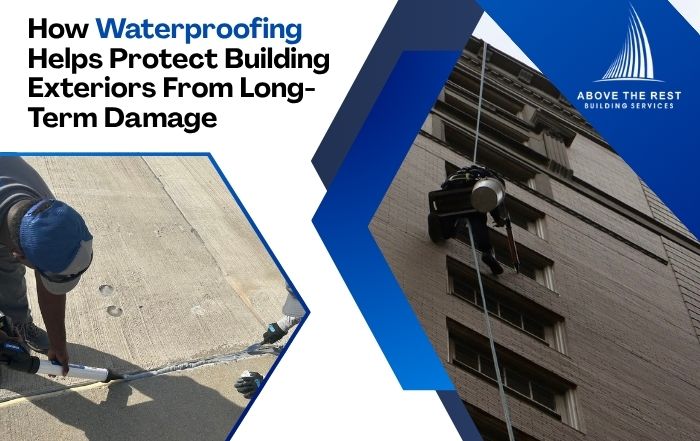
A property manager walks the site after a heavy rain. Everything looks fine from a distance.
No visible cracks. No obvious damage.
But near the base of the wall, there’s a faint stain. A slightly darker patch. Nothing urgent—yet.
Three months later, that same area starts to peel.
Six months later, there’s moisture inside the building.
A year later, it’s no longer a maintenance issue. It’s a repair project.
This is how water damage works. It doesn’t arrive as a problem. It builds quietly until it becomes one.
Waterproofing for building exteriors is one of the most effective ways to stop this process before it escalates.
Why Water Is The Most Overlooked Threat To Buildings?
Most exterior damage is blamed on age, weather, or usage. In reality, water is the common factor behind all of them. Water doesn’t just sit on the surface. It finds entry points- small cracks, weak joints, unsealed edges- and once it enters, it changes how materials behave.
Concrete weakens.
Coatings lose adhesion. Steel begins to corrode.
And the most critical part? None of this is immediately visible.
The Real Problem Isn’t Water — It’s Repetition
One rainfall doesn’t damage a building. Repeated exposure does.
Every time moisture enters and dries, materials expand and contract. Over time, this movement creates stress within the structure.
That’s when you start seeing:
- Hairline cracks turning into visible fractures
- Surface coatings beginning to fail
- Moisture moving deeper into structural layers
- Early-stage corrosion in reinforced elements What appears gradual, is actually
Why Waterproofing For Building Exteriors Matters More Than It Appear?
Waterproofing is often seen as a protective layer. In reality, it is a control system. It manages how water interacts with your building over time.
When properly implemented, waterproofing for building exteriors:
- Blocks moisture at vulnerable entry points
- Reduces internal stress caused by water movement
- Protects coatings and surface finishes
- Preserves structural integrity over time
It doesn’t eliminate exposure- it controls its impact.
Where Buildings Usually Fail First?
Water rarely impacts the entire building evenly. It targets weak points.
- Window edges and perimeter joints
- Roof transitions and connection points
- Expansion joints in façades
- Parking decks and exposed slabs
- Areas with poor drainage flow
These aren’t defects, they’re design realities. Without proper waterproofing, they become entry points.
Why Most Waterproofing Fails (And What That Means)?
Here’s where many properties go wrong. Waterproofing is often treated as a one-time task. Apply a coating. Seal a joint. Move on.
But buildings move, materials age, and conditions change. When waterproofing isn’t inspected or maintained:
- Sealants dry out and crack
- Coatings lose effectiveness
- New entry points develop
- Previous repairs begin to fail
Even well-applied systems can fail without ongoing attention.
The Signals Property Managers Notice First
Waterproofing failure doesn’t show up as “waterproofing failure.” It shows up as:
- Recurring leaks in the same areas
- Discoloration on walls or ceilings
- Peeling paint or surface coatings
- Complaints from tenants about dampness
- Repeated maintenance fixes that don’t last
At this stage, the issue has already progressed beyond prevention.
Why Timing Changes Everything?
Water damage is not linear; it accelerates.
Early-stage waterproofing issues are controlled and localized. Delayed action spreads the problem across multiple systems.
That’s the difference between:
- Sealing a joint vs Repairing structural damage
- Applying a coating vs Replacing degraded materials Timing defines the scale of the problem.
The Business Impact No One Talks About
Waterproofing is often seen as a technical task, but for property owners and managers, the impact is operational.
Poor waterproofing leads to:
- Increased maintenance calls
- Tenant dissatisfaction
- Budget unpredictability
- Compliance concerns
- Reduced asset perception
It’s not just about damage. It’s about how the property performs.
A More Practical Approach To Waterproofing
Instead of reacting to visible issues, high-performing properties treat waterproofing as an ongoing system.
A structured approach to waterproofing for building exteriors includes:
- Scheduled inspections based on exposure
- Identifying high-risk zones early
- Reinforcing joints and transitions proactively
- Maintaining coatings before failure begins
This approach shifts waterproofing from repair to control.
Frequently Asked Questions
1. Does every building need waterproofing?
Yes. All buildings are exposed to moisture. Waterproofing controls how that exposure impacts the structure.
2. Is waterproofing only required after damage appears?
No. The most effective waterproofing happens before visible damage begins.
3. How do you know if waterproofing is failing?
Recurring leaks, surface deterioration, and moisture-related complaints are early indicators.
4. How often should waterproofing be checked?
At least annually, and after major seasonal changes.
Why Above The Rest Building Services?
Waterproofing is not just about applying materials. It’s about understanding how buildings behave over time, and executing work safely in complex environments.
Above The Rest Building Services supports commercial properties across New England with:
- Targeted waterproofing solutions for facades, joints, and exposed surfaces
- Early identification of moisture entry risks through structured inspections
- High-access capability to reach critical and hard-to-access areas
- Coordinated execution without disruption to tenants and operations Every project is delivered with a strict safety-first approach, including:
- SPRAT and IRATA certified rope access technicians
- Certified boom lift and aerial platform operators
- Roof anchor inspections before work begins
- Site-specific safety planning and risk assessments
- Full personal protective equipment (PPE) compliance
Our focus is not just fixing visible issues, but preventing them from developing, with safety and precision at every stage.
Before It Becomes A Repair Problem
Water damage rarely announces itself early. It builds quietly, spreads gradually, and becomes visible when it’s already advanced.
If your property is showing early signs of moisture exposure—or has not been assessed recently—this is the right time to act.
A structured inspection helps identify risks early and ensures your waterproofing systems are performing as intended.
