

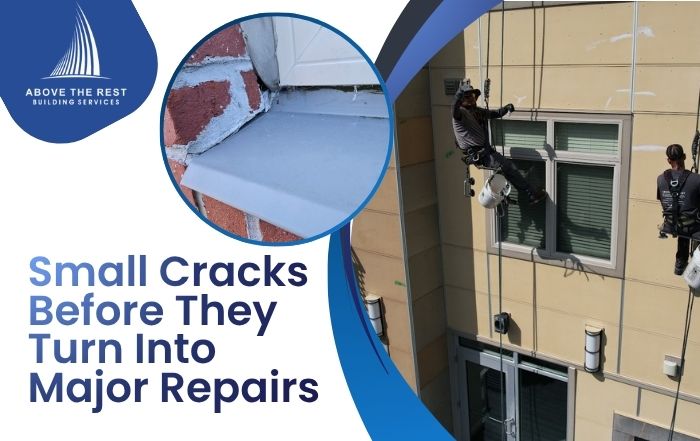
A Situation Most Property Managers Recognize
You notice a small crack during a routine walk-through. It’s not new—but it’s more visible than before.
You pause for a moment.
“Not urgent. We’ll review it later.”
That decision happens across buildings every day. And in New England, that’s exactly where small repairs turn into larger problems.
What That Small Crack Is Actually Doing Right Now?
It may not look serious, but behind the surface:
- moisture may already be entering
- material stress may be increasing
- surrounding areas may be weakening
A crack doesn’t need to look severe to start causing damage.
Scenario 1: “It’s Just a Surface Crack”
That’s the most common assumption. But here’s what usually follows:
- The crack becomes more visible
- similar cracks appear nearby
- minor staining starts to show
What looked cosmetic becomes progressive.
Scenario 2: “We’ll Address It In The Next Maintenance Cycle”
Sounds reasonable—but in New England conditions:
- temperature changes expand the crack
- moisture cycles deepen the damage
- repair scope increases over time
Delaying doesn’t pause the issue, it accelerates it.
Scenario 3: “It’s Not Affecting Tenants Yet”
This is where most decisions get delayed. But by the time tenants notice:
- the crack has expanded
- moisture damage may already xist
- repair is no longer minor
Visibility is often the last stage—not the first.
So When Does A Small Crack Become A Repair Issue?
Instead of overthinking it, use this:
If you notice any change, it’s no longer static.
- more visible than before
- spreading across the surface
- reacting to weather conditions
- appearing in multiple areas
That’s not a small crack any more. That’s active damage.
Why does this happen faster in New England?
The environment plays a major role.
Water enters → freezes → expands → widens crack → repeats This continuous cycle leads to:
- faster crack growth
- deeper penetration
- higher repair complexity
What takes months elsewhere can escalate faster here.
What Small Crack Repair Actually Means?
It’s not just filling the gap. Proper small crack repair in New England includes:
- stabilizing the affected surface
- addressing moisture entry
- correcting sealant issues
- reinforcing the surrounding material
- applying protective treatment
If the cause isn’t addressed, the crack returns.
The Real Cost Difference
Most cost concerns come from uncertainty. Here’s the reality:
- early crack repair → predictable
- delayed repair → variable
- advanced damage → expensive
The crack doesn’t define cost—timing does.
Questions Property Managers Ask
1. Is a small crack in a wall serious?
It can become serious if it expands or allows moisture to enter.
2. When should small cracks be repaired?
As soon as they show signs of change or progression.
3. Do cracks always get worse?
In New England conditions, most cracks expand over time.
4. Who handles small crack repair near me?
Contractors experienced in exterior maintenance and masonry repair.
What Most Property Managers Regret?
Not acting sooner. Once the crack progresses:
- repair scope increases
- cost rises
- urgency replaces planning
Small cracks rarely stay small long enough to ignore.
Why Above The Rest Building Services?
When you use Above The Rest Building Services, small crack repair is handled with a focus on early-stage control.
We work with commercial properties to:
- Identify whether cracks are active or stable
- Address underlying moisture and surface issues
- Prevent cracks from expanding
- Complete repairs using high-access systems
Because equipment is managed in-house, inspections and repairs can begin without delays. This allows property managers to act early, before issues escalate.
If You’re Still Deciding
Here’s the simplest way to look at it:
If you noticed the crack… It’s already worth checking.
Take Action Before It Becomes A Larger Repair
Request a quick assessment before cracks expand
Acting early keeps the problem controlled—and the cost predictable.
